


Grout is often treated as the finishing touch in a tile installation, but its role is much bigger than that. It affects hygiene, stain resistance, durability, maintenance, and how long the surface continues to look clean and well-finished. In spaces exposed to moisture, spills, cleaning agents, and regular use, grout performance becomes just as important as the tile itself.
That is why epoxy grout stands out. It is not simply a premium alternative to standard grout. It is a performance-led choice for areas where long-term cleanliness, strength, and resistance matter more. If the goal is to create tile joints that hold up better in demanding conditions, understanding how to apply epoxy grout properly is essential.
What is epoxy grout and why does it matter?
Epoxy grout is a resin-based grouting material made from epoxy resin, hardener, and fillers. Unlike cement-based grout, it does not cure through water retention. Instead, it forms a denser and less absorbent joint once mixed and applied correctly.
That difference matters because tile joints are usually the most vulnerable part of a tiled surface. Even when tiles are strong, poorly chosen or poorly applied grout can become the point where staining, moisture problems, discolouration, and maintenance issues begin. Epoxy grout is designed to reduce these risks.
This is why it is often used in projects where performance is a priority, not just appearance.
Where epoxy grout works best
Epoxy grout is especially suitable in areas where the joints need to resist more than everyday dust and dry foot traffic. It performs well in:
- Bathrooms and shower areas
- Kitchen backsplashes and countertops
- Balconies and utility zones
- Commercial kitchens and food preparation areas
- Hospitals and hygiene-sensitive spaces
- Retail and hospitality environments
- Areas exposed to cleaning chemicals or repeated washing
The reason is simple. In these spaces, grout is exposed to water, soap residue, oils, food spills, cleaning agents, or frequent scrubbing. Standard grout may still work in some conditions, but where the environment is more demanding, epoxy grout is often the more dependable recommendation.
Why many projects choose epoxy grout over cement grout
The biggest advantage of epoxy grout is not that it sounds more advanced. It is that its properties solve practical site problems.
1. Better stain resistance
In kitchens, vanity areas, and commercial zones, grout lines are exposed to oils, food particles, soap residue, and everyday dirt. Epoxy grout resists absorption better, which helps the joints stay cleaner and reduces long-term staining.
2. Lower water absorption
In wet areas, moisture can gradually affect ordinary grout lines, especially if maintenance is poor or installation quality is inconsistent. Epoxy grout helps reduce this risk because its structure is denser and less porous.
3. Stronger long-term performance
Tile joints expand, contract, and face repeated use over time. A grout that is more resistant to wear, shrinkage, and cracking helps the installation stay intact for longer.
4. Easier maintenance
This is one of the most practical reasons to recommend epoxy grout. A surface that resists staining and moisture is generally easier to maintain. That matters for both homeowners and commercial property managers.
5. Better fit for premium installations
Where the expectation is long-lasting appearance and lower upkeep, epoxy grout often makes more sense. It supports a more complete tile installation system rather than being treated as an afterthought.
What to check before you start
Before applying epoxy grout, it is important to understand that good results depend on more than just the grout itself. Even a high-performance grout can underperform if the installation conditions are poor.
Check the following before you begin:
1. Has the tile adhesive fully cured?
This is critical. If the adhesive below the tiles has not cured properly, movement or trapped moisture can affect the grout joint later.
2. Are the joints clean?
Dust, loose particles, adhesive residue, and moisture inside the joints will interfere with bonding. Clean joints give the grout the best chance to perform as intended.
3. Is the joint depth and width suitable?
Grout needs proper joint space to settle and lock in. Shallow or poorly cleaned joints reduce the quality of the final fill.
4. Are you working in manageable sections?
Epoxy grout has a shorter working time than ordinary grout. That means application and cleaning should be planned carefully rather than rushed across a very large area.
This is also where product recommendation becomes more intelligent. A good blog should not suggest epoxy grout everywhere by default. It should suggest it where site conditions actually justify it. For wet areas, premium bathrooms, kitchen zones, and commercial spaces, it is often the smarter recommendation.
Tools and materials required
For a smooth epoxy grout application, keep the following ready:
- Epoxy grout components
- Clean mixing bucket
- Mixing tool
- Rubber grout float
- Sponge for cleaning
- Clean water
- Protective gloves
- Soft cloth for final wipe if needed
Using the right tools is not just about convenience. It affects finish quality. Epoxy grout is less forgiving than ordinary cement grout, so the correct tools help control both filling and cleaning.
Step by step guide to applying epoxy grout
1. Prepare the tile surface properly
Start by making sure the adhesive has cured fully. The joints should be clean, dry, and free from dust, debris, and adhesive residue.
This step matters because grout does not simply sit on the surface. It must properly fill and bond inside the joint. If residue blocks that space, the joint may look filled but perform poorly over time.
2. Mix the epoxy grout correctly
Mix the components exactly as instructed for the product being used. Do not add water. Do not estimate ratios. Do not partially mix without understanding the proportion correctly.
This is one of the most important stages because epoxy grout depends on proper chemical mixing for correct curing. If the ratio is off, the grout may become too stiff, too weak, difficult to clean, or inconsistent in performance.
3. Apply the grout diagonally across the joints
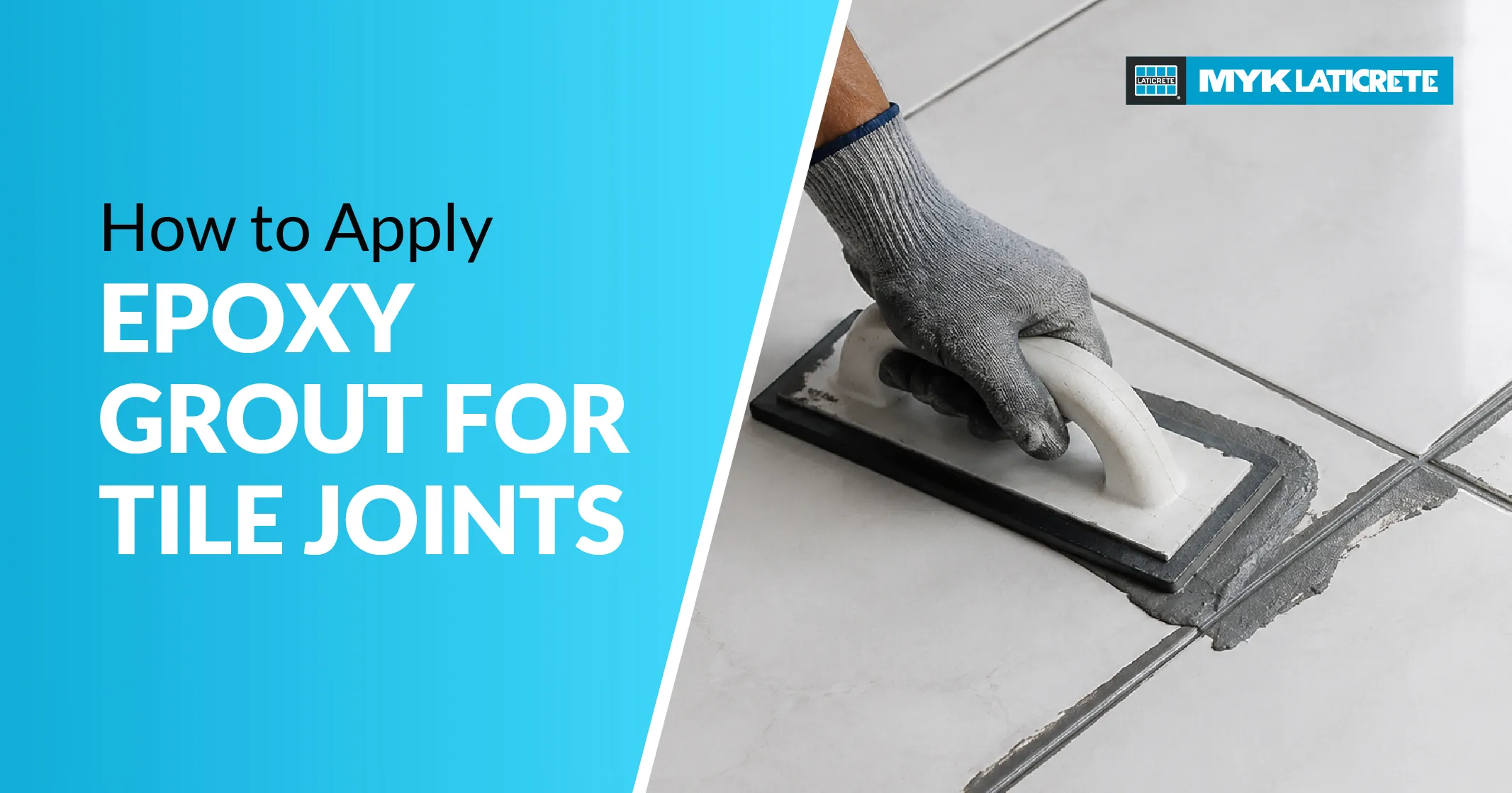
Use a rubber grout float and spread the grout diagonally across the tile surface. Press firmly so the grout is pushed fully into the joints.
This is not just about covering the gaps. Proper pressure ensures the joints are packed well and reduces the chance of weak spots, air pockets, or uneven filling.
4. Remove excess grout early
As you work, remove excess material from the tile surface. Do not allow a thick film to sit for too long.
This is where epoxy grout differs strongly from traditional grout. If excess residue is ignored, it becomes harder to remove and can leave a visible haze or hardened film on the tile face.
5. Clean in stages
Use a damp sponge to clean the tile surface soon after application. Avoid excess water. The goal is to clean the tile face without pulling grout out of the joint.
A second cleaning pass is often necessary to remove remaining residue. This stage is important because a neat grout joint is only half the job. The tile surface must also be left clean and presentable.
6. Allow proper curing time
Once the area is cleaned, allow the grout to cure fully before exposing it to water, heavy cleaning, or traffic.
Curing time is not a formality. It is what allows the material to develop the performance it was chosen for in the first place.
Common mistakes and why they happen
Even experienced installers can run into trouble with epoxy grout when they treat it like standard cement grout. The most common issues usually come from habit, speed, or poor preparation.
1. Delaying the cleaning process
This is one of the biggest mistakes. Epoxy residue becomes harder to remove if left too long, which can affect the final finish.
2. Mixing too much at once
Because working time is limited, large batches often lead to waste and rushed application. Smaller controlled batches are usually safer.
3. Applying on damp or dirty joints
This weakens bonding and affects the quality of the finished joint.
4. Guessing the mix instead of following instructions
Epoxy grout is chemistry-driven. Incorrect proportioning affects curing and final performance.
5. Ignoring the full tile installation system
Grout cannot compensate for poor substrate preparation, incorrect adhesive selection, or movement in the tiled surface. A good recommendation should always consider the full system, not only the grout line.
Final application tips for better results
A successful epoxy grout application depends on timing, preparation, and careful cleaning. Work in small sections, mix only the quantity you can use within the working time, and clean the tile surface before residue begins to harden.
It is also important to follow the product instructions closely, especially for mixing ratios, working time, and curing duration. Unlike conventional grout, epoxy grout requires more control during application, but when handled correctly, it delivers a cleaner finish and stronger long-term performance.
Conclusion
Applying epoxy grout correctly is essential for achieving clean joints, better stain resistance, and long-lasting tile performance. The process requires proper surface preparation, accurate mixing, careful joint filling, and timely cleaning.
When each step is done correctly, epoxy grout helps create a durable and low-maintenance finish that performs well in demanding tiled areas. For both residential and commercial tile installations, careful application is the key to getting the full benefit of epoxy grout.




