


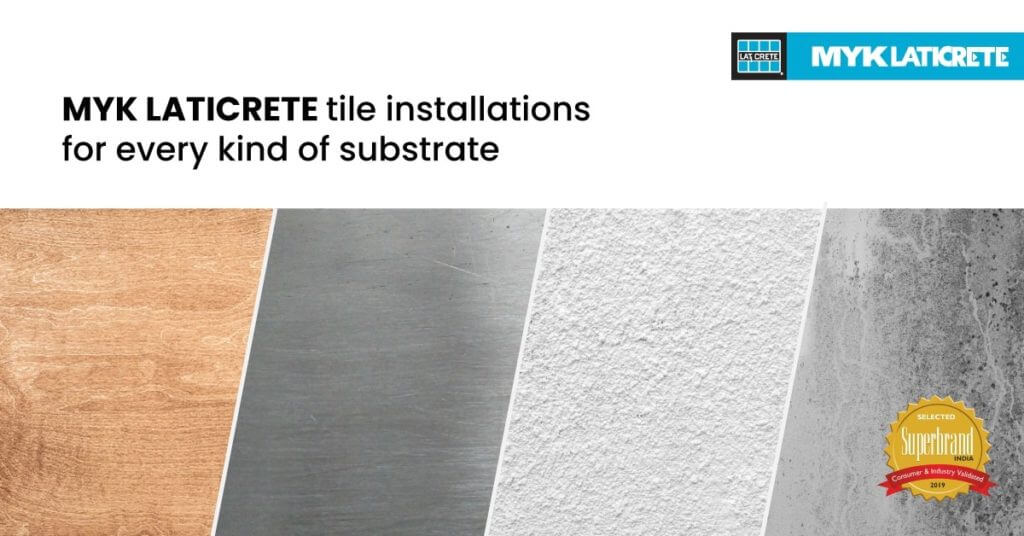
Every tile-fixing project relies on three key components: the tile, the substrate (a solid, level base), and the tile adhesive. Adhesion depends equally on all three. However, substrate characteristics largely dictate both tile and adhesive selection. Substrates vary significantly in terms of:
- Material composition
- Surface roughness
- Stability and durability
- Flatness and evenness
- Chemical compatibility
- Sensitivity to moisture and water
- Potential for shrinkage
Substrate Variations and Their Impact on Tiling
As a result, no two tiling installations are the same unless the intrinsic characteristics and the materials of the substrates remain identical. In the old days, a thick bed of mortar was the most common substrate but the consideration list has expanded to include everything from floorboards to tile-backer boards to existing tiles to sand: cement screeds to steel to fiber glass to bricks and other substrates.
Not all these substrates are acceptable to receive all kinds of tiles and stones and some might even require prepping. For instance,
Specific Substrate Challenges and Solutions
- Tiling over Existing Tiles: Installing a tile over an existing tile might require roughening up the base tile to provide a better grip and warrants the need of a high-strength adhesive such as the LATICRETE 325 High Flex, a one-step, polymer fortified mortar that has superior flexibility and unparalleled adhesion
- Tiling over Plasterboard: Tiling over plasterboard in indoor wall surfaces may require waterproofing of the substrate since plasterboards are highly absorbent. It also entails the use of an adhesive that is water-resistant such as the LATICRETE DWA 215, a modified Polyurethane adhesive
- Tiling over Wood: Tiling over wood means that the tiles and the adhesive are subject to a substrate that will warp/expand when wet, leading to the formation of huge stresses between the tile and the substrate which can lead to debonding or fracture of tiles
- Tiling over Metal: Since metal substrates tend to be extremely smooth, they practically do not allow for mechanical keys to hold tiles on them. Both wood and metal necessitate the use of adhesives such as the LATICRETE PUA 212, a two-component, modified Polyurethane adhesive that is highly elastic, and thixotropic and can aid in laying tiles and stones on absorbent and non-absorbent substrates
Importance of Adhesive Selection and Manufacturer Instructions
Other substrates such as existing asphalt may contain oils that can make it difficult to adhere tiles and stones to. It is thereby mighty important to consider all these factors seeing as the tile adhesive that will be required will differ. MYK LATICRETE has consequently designed a line of tile adhesives that are flexible enough to work on everything from cement to metal, across residential, commercial and industrial applications.
Bottom Line
As a result, a lot of these products are formulated to be used where installations must resist shock, water, temperature changes, physical abuse, and mild chemicals. Referring to installation instructions as per the manufacturer is the best practice when installing tiles over any kind of substrate. All these can go a long way in ensuring the tile job lasts for a long time.




