


Through the ages, architecture has been assisted by major advances in both design and new materials. Architectural developments enhanced design through the construction of arches, domes, frescoes, and mosaics, adding to the functionality and grandeur of a structure.
In order to facilitate this, developments in materials were also crucial. The Roman invention of concrete – a mixture of lime mortar, sand, water, and stones, in the 3rd century BCE – revolutionized engineering and architecture. As large marble slabs and pillars gave way to tile-covered concrete as the main building material, architects discovered they could be more innovative in their designs.
The Evolution of Architectural Styles and Materials
This has carried over into the modern day with architectural structures ranging from grand, domed buildings of marble, stone, or wood, to free-flowing structures of glass and steel. And as architectural styles change, so do the materials which are used.
The Growing Popularity of Metal Tiles
Among the many changes in design, today is the use of metal tile. They have become quite popular in commercial and residential construction, thanks to their versatile nature.
Applications and Advantages of Metal Flooring (Elaborated)
Metal flooring offers a robust and versatile solution for various applications, particularly where durability and strength are paramount. Here’s a breakdown of its uses and benefits:
Applications:
- High-Traffic Areas: Metal flooring excels in environments experiencing heavy foot traffic, making it ideal for:
- Multi-story buildings
- Mezzanines
- Bridge walkways
- Porches
- Platforms
- Parking garages
- Storage facilities
- Industrial Spaces: Its resilience makes it a common choice for industrial settings.
- Residential Use (Emerging Trend): Metal tiles are increasingly used in homes for:
- Wall accents
- Floor accents
- MS panel staircases
- Versatile Design: Metal can be shaped and moulded into diverse patterns, allowing for creative and statement-making designs in both residential and commercial settings.
Advantages:
- Durability and Strength: Metal flooring is exceptionally durable and can withstand significant wear and tear, making it a long-lasting investment.
- Fireproof: Metal is inherently non-combustible, providing a significant safety advantage.
- Waterproof: Metal flooring is resistant to water damage, making it suitable for areas prone to moisture exposure (with appropriate sealing and coatings).
- Design Consistency: Manufactured metal tiles offer consistent dimensions and finishes, ensuring a uniform and aesthetically pleasing appearance.
- Insulation: Metal can contribute to building insulation, helping to regulate temperature and potentially reducing energy consumption.
- Energy Efficiency: The insulating properties can lead to lower energy expenses for building owners.
- Eco-Friendly and Sustainable: Metal is often recyclable, making it an environmentally responsible building material.
Challenges of Installing Tiles on Metal Surfaces
However, fixing tiles on metal surfaces and metal tiles on regular surfaces comes with its own challenges in construction. Metal surfaces and concrete surfaces are entirely different in their properties. The tiles have to be set and held securely without damaging the tile and metal or concrete substrates.
Challenges with Modern Finishing Materials (Agglomerates/Engineered Stone)
The innovation in finishing materials also poses new challenges. For example, new, innovative manufactured stones (also known as agglomerates/quartz/engineered stones) use resin binders to make beautiful glossy new-age designs in large formats (sizes up to 10ft x 6ft). The resin binders which are used in these resin agglomerates do not allow cement-based slurry or thin-set adhesives to form a proper bond with them during installation and can lead to debonding. Hence, they require resin-based material for installation without debonding for permanent, hassle-free performance.
MYK LATICRETE PUA 212: A Solution for Bonding Challenges
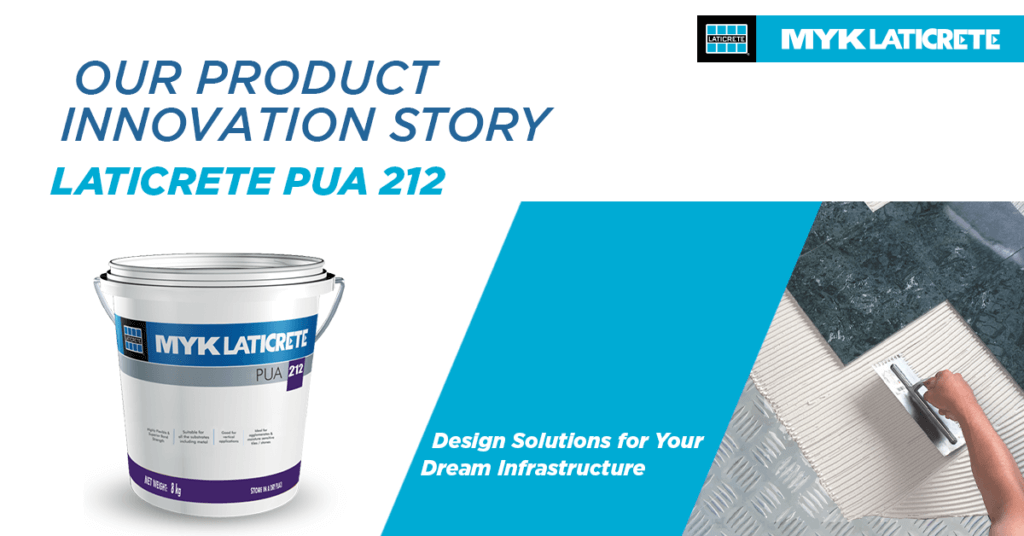
In order to facilitate this and provide architects with design solutions, MYK LATICRETE formulated PUA 212. This can safely – aesthetically, economically, and without damage – secure agglomerate tiles, especially metal tiles, to the substrate.
Key Features and Benefits of PUA 212
MYK LATICRETE’s PUA 212 elasticity, flexibility, and sensitivity to all kinds of tiles, stones, and substrates provide great bond strength. Completely eco-friendly, it has an EN 12004/ISO 13007:R2TE compliant modified Polyurethane Adhesive certification. PUA 212 is designed especially for interior and exterior floor and wall installations of agglomerates, metal tile, and natural stones over concrete and on a variety of substrates including metal substrates and drywall boards. Good for vertical applications, it is also ideal for moisture-sensitive tiles/stones.
MYK LATICRETE’s Commitment to Innovation
MYK LATICRETE’s PUA 212 believes in expanding the capabilities of architects and designers by giving them innovative materials to work with and helping create monuments that stand the test of time.




