


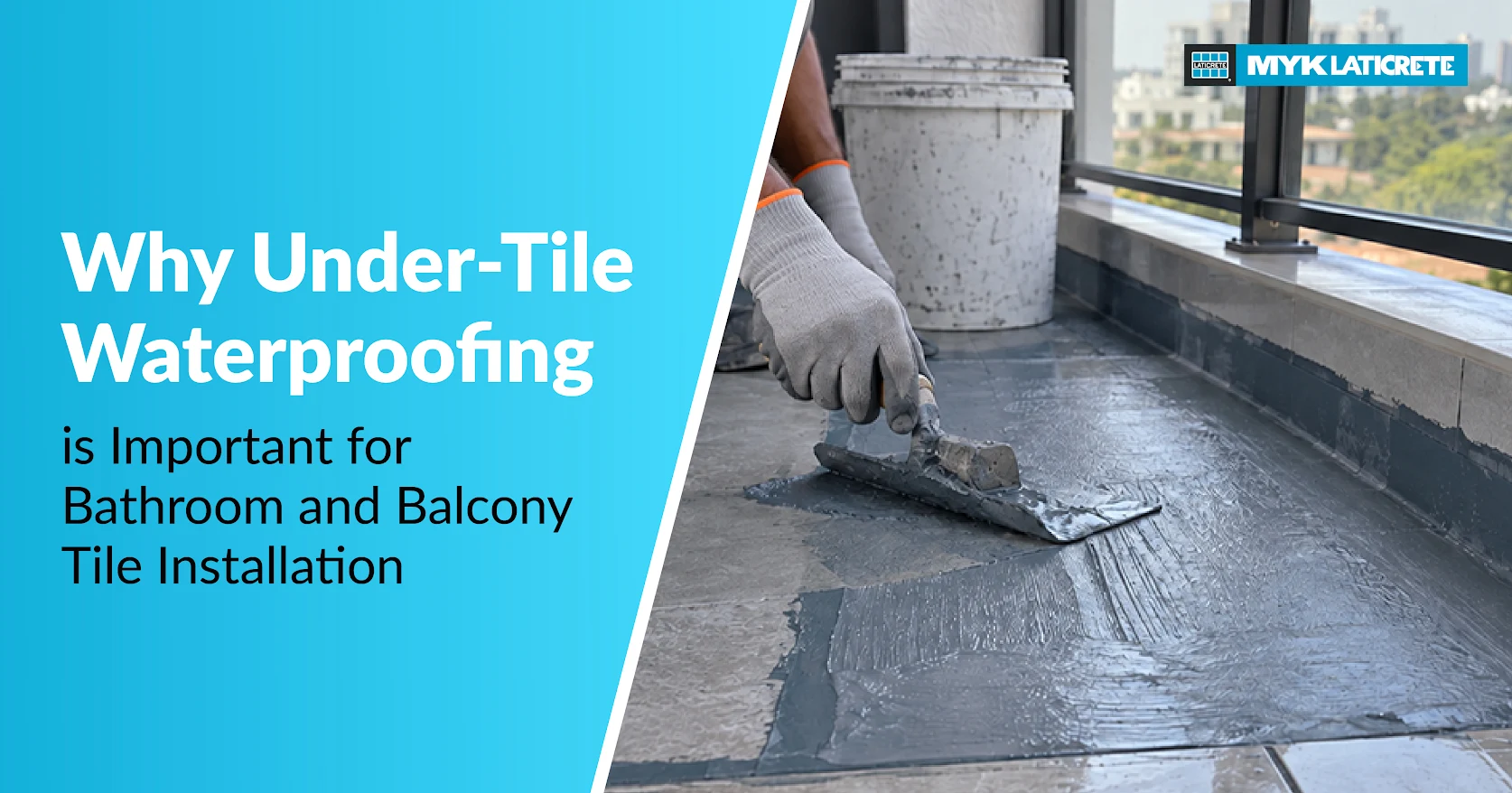
A damp ceiling below the bathroom rarely begins with a broken tile. It usually starts much earlier, beneath the surface. In many Indian homes, bathrooms and balconies face daily water exposure, humidity, and seasonal monsoons, yet the waterproofing layer beneath the tiles is often overlooked. While tiles may appear waterproof, moisture can seep through grout joints, hairline cracks, and pipe penetrations, gradually damaging the slab, walls, and adjoining spaces.
Even the highest-quality ceramic or porcelain tiles cannot prevent water from reaching the substrate beneath. Over time, this leads to damp walls, leaking ceilings, Mold growth, and costly repairs. Hence, under-tile waterproofing is an essential part of every effective bathroom waterproofing and tile waterproofing system. Rather than relying on tiles alone, a complete waterproofing system combines a waterproof membrane with compatible tile adhesives and grouts to deliver long-lasting protection.
Tiles Are Water-Resistant, Not Waterproof
A tiled surface may look impermeable, but it is only the visible finish. Water can gradually pass through grout lines, tiny cracks, and poorly sealed corners before reaching the concrete slab underneath. Over time, trapped moisture weakens the substrate, damages adjoining walls, and causes paint peeling or ceiling stains in the apartment below.
This is particularly common in Indian bathrooms, where repeated wetting and drying cycles, combined with high humidity, accelerate deterioration. Balconies face an even greater challenge, as they must withstand both internal water exposure and seasonal monsoon rains.
A reliable waterproofing system therefore extends beyond tiles. It includes a liquid waterproofing membrane beneath the tiles, compatible waterproof tile adhesives, and durable grouts that work together as a complete assembly rather than independent products.
Why Under-Tile Waterproofing Is Important
Indian building standards recognise waterproofing as an essential part of wet-area construction. IS 13182:1991 recommends waterproofing for bathrooms, kitchens, balconies, and other wet areas, along with proper drainage slopes and water testing before tiling. Similarly, the National Building Code (NBC) 2016 recommends:
- Extending waterproofing at least 300 mm up walls, with full-height protection in shower areas.
- Maintaining adequate floor slopes towards drainage points.
- Conducting a 48-hour ponding test before tiling to verify the membrane’s integrity and identify leaks before finishes are installed.
For better long-term performance, waterproofing should be treated as a complete system rather than a standalone layer. Following these best practices helps:
- Prevent seepage into lower floors and adjoining rooms.
- Protect concrete slabs and reinforcement from long-term water damage.
- Reduce Mold and mildew caused by persistent dampness.
- Improve tile adhesion in continuously wet environments.
- Minimise costly repairs, including retiling, repainting, and structural restoration.
Pairing a high-performance waterproof membrane with compatible tile adhesives and grouts, such as those offered by MYK LATICRETE, creates a durable, leak-resistant installation built for India’s demanding climate.
Bathrooms vs Balconies: Different Spaces, Same Waterproofing Need
Although bathrooms and balconies are exposed to water in different ways, both require effective under-tile waterproofing to prevent seepage, dampness, and long-term structural damage. The waterproofing approach varies depending on the type and intensity of water exposure, but the objective remains the same: keeping moisture out of the building structure.
| Aspect | Bathrooms (Internal Wet Areas) | Balconies (External Wet Areas) |
|---|---|---|
| Water exposure | Daily showers, washing, mopping, and high humidity. | Monsoon rain, wind-driven water, washing areas, and temperature fluctuations. |
| Primary risk | Seepage through grout joints and pipe penetrations, causing damp walls and leaking ceilings. | Water ingress, thermal movement, cracking, and damage to external walls or lower floors. |
| Recommended waterproofing | Extend the membrane at least 300 mm up walls and 1.8–2.1 m in shower areas. | Treat as a waterproofed tray with membranes turned up at parapets and adjoining walls. |
| Drainage | Floor slope of 1:80–1:100 towards the floor trap. | Floor slope of 1:80–1:100 towards drainage outlets to prevent water accumulation. |
Regardless of the application, effective waterproofing depends on proper detailing around drains, corners, wall-floor junctions, and service penetrations. When combined with the correct installation practices, a well-designed under-tile waterproofing system helps prevent leaks, extends the life of tiled surfaces, and reduces the risk of costly repairs.
How Under-Tile Waterproofing Is Installed
Proper installation is just as important as choosing the right waterproofing system. The process typically involves:
- Prepare the substrate: Clean the surface, repair cracks, and create the recommended slope (1:80–1:100) towards the drain.
- Reinforce critical joints: Form coves at wall-floor junctions and seal corners, drains, and pipe penetrations.
- Apply the waterproofing membrane: Use two coats with reinforcing mesh at vulnerable areas to create a continuous waterproof barrier.
- Conduct a 48-hour ponding test: Check for leaks before laying tiles.
- Complete the tile installation: Fix tiles with compatible waterproof tile adhesives and finish with durable grouts for long-term performance.
A well-executed waterproofing system beneath the tiles significantly improves durability, minimises leakage risks, and helps protect the structure for years to come.
The Cost of Skipping Waterproofing
Many homeowners hesitate to invest in waterproofing because of the upfront cost. However, repairing a failed bathroom or leaking balcony often requires breaking finished tiles, replacing waterproofing, repairing ceilings, repainting walls, and sometimes compensating neighbours for water damage.
Depending on the city, system, and project scope, waterproof bathroom flooring typically costs between ₹80 and ₹180 per sq. ft., while exposed balcony waterproofing ranges from ₹100 to ₹250 per sq. ft. Although premium systems may have a slightly higher initial cost, they highly reduce maintenance expenses and prevent disruptive repairs over the life of the building.
Choosing the Right Waterproofing System
Selecting the right waterproofing products depends on the application, exposure conditions, and long-term performance required.
For most bathroom waterproofing and balcony tile waterproofing projects, liquid-applied cementitious membranes are preferred because they create a smooth waterproof liquid for the bathroom beneath the tile layer. Solutions such as LATICRETE® 9237 provide crack isolation and long-lasting under-tile waterproofing for wet areas.
For exposed terraces and large balconies, sheet membranes such as APP, SBS, PVC, and EPDM are often specified because of their high puncture resistance. For projects requiring a thin, load-bearing membrane, HYDRO BAN® offers a single-component, self-curing liquid rubber waterproofing membrane that forms a flexible, durable barrier beneath tile and stone installations. Regardless of the membrane selected, pairing it with a compatible waterproof adhesive and grout creates a complete, long-lasting waterproofing system.
Build for Today. Protect for Tomorrow.
Water damage rarely appears overnight. It burgeons gradually beneath the finished surface, often remaining unnoticed until repairs become expensive and disruptive. If you’re designing a new home or renovating an existing one, investing in waterproofing is one of the smartest ways to protect your property.
A complete system that combines a high-performance waterproof membrane, compatible tile adhesives, and durable grouts delivers far greater reliability than treating each component separately. With MYK LATICRETE’s integrated waterproofing solutions, homeowners, builders, architects, and contractors can create bathrooms and balconies that remain dry, durable, and ready to withstand India’s demanding climate for years to come.
FAQs
1. Is under-tile waterproofing necessary for every bathroom?
Yes. Tiles and grout are not completely waterproof and can allow moisture to seep into the substrate over time. Installing an under-tile waterproofing membrane helps prevent leaks, dampness, mold growth, and structural damage, making it a recommended practice for all bathrooms.
2. How high should bathroom waterproofing be applied?
According to Indian building practices and project specifications, waterproofing should extend at least 300 mm up the walls, while shower areas are typically waterproofed up to 1.8–2.1 metres for better protection against continuous water exposure.
3. Why do balconies need waterproofing if they are already tiled?
Balconies are exposed to rain, wind-driven moisture, and temperature changes throughout the year. Without proper waterproofing beneath the tiles, water can penetrate the slab, leading to cracks, seepage, and damage to adjoining walls or lower floors.
4.What is the ponding test method for waterproofing?
A ponding test involves filling the waterproofed area with water for 48 hours before tiling. It verifies the integrity of the waterproofing membrane and helps identify any leaks before the final floor finish is installed.
5. Can waterproofing reduce future repair costs?
Absolutely. Investing in waterproofing during construction or renovation is far more economical than repairing water damage later. It helps avoid expenses associated with retiling, repainting, ceiling repairs, structural deterioration, and Mold remediation.
6. What should a complete waterproofing system include?
An effective under-tile waterproofing system should include a high-performance waterproofing membrane, compatible tile adhesives, and durable grouts that work together to create a long-lasting, leak-resistant tiled assembly.




